Nara is a small and cute town, famous for its deer park, where you can hand feed gentle deer, the 2nd tallest Buddha statue in Japan (15 meters), and an assortment of beautiful temples and shrines.
I met some Americans living in Switzerland on the train ride from Osaka to Nara, and we ended up spending the afternoon together, feeding deer and admiring the temples. Once they left, I lingered to enjoy the park and take more pictures as the sun dipped beyond the horizon.
While roaming around looking for a place for dinner that evening, I randomly stumbled across a Michelin rated restaurant. I entered, and asked for a menu. The chef, standing in what looked to be his open-concept kitchen next to a counter that could sit only 10 people, spoke very little English. One of the patrons, a friendly woman named Mao, cheerfully offered to act as a translator and invited me to join them. She explained the place offered a 16 course meal, each course comprising of a little brochette with either fish, vegetables, beef or egg. The place had a warm feeling, and the hospitality of the chef and Mao were too welcoming to decline, so I had a seat.
Most courses were tempura, cooked in a special oil. The chef presented each dish in Japanese while Mao diligently translated. Some were to be eaten directly, while others were to be complimented with soy sauce or green tea salt. It ended up being one of the best meals I’ve tasted to date, and at a reasonable price.
I’ve been negligent with recent activity because I have been completely enthralled by Japan. It’s already been 12 days, and each day is filled with wonder, puzzles, delicious food and beauty.
It was very important to be in Japan in early April, for the cherry blossoms, and they are more beautiful than I imagined. The most common variety is mostly white with a pinkish center. But let’s step back for a moment.
Upon arriving in Japan from Nepal, the immigration officer looked at all my stamps for the last 6 months and ushered me to a side room to examine my belongings. He was looking for contraband, as Nepal is notorious for weed and hash. Two officers went through everything, and I mean everything – opening every zipper, unraveling every sock, asking what each piece of technology does. I was patient and smiled the entire time, knowing there was nothing to fear. Through the process, they kept apologizing, and even complimented on how well my backpack was packed. I chuckled, thinking there’s no reason for them to apologize for doing their job!
Here are my first impressions of Osaka, and Japan in general, since the culture shock was formidable:
Japanese are extremely respectful and polite. I’ve seen restaurant staff bow while I was crossing the street, even though I never ate there. They also apologize for everything (see above for example)
Cities are super clean, especially compared to where I’ve been for the last several months. Despite the cleanliness, you’re always hard pressed to find a garbage can. It’s though they are allergic to them, so you need to carry your trash until you discover one hiding in a corner.
Everything is really well organized. It might take a few minutes to determine how things work, but then you usually end up saying, “well, that makes sense!”
Example 1, when the elevator door begins to close, the “open door” button starts to flash, so you quickly know which one to press in case someone is running for the elevator.
Example 2, when buying a single ride for the subway, you can choose the amount to pay. The screen doesn’t tell you how much you should pay, so I obviously chose the smallest amount for the first time. When exiting the subway, you need to insert your ticket into the carousel. It sensed an error and tried to close, but I was faster than it was. The second time I tried this, the ticket-booth guy stopped me and guided me to a “ticket adjustment” kiosk, indicating I needed to pay more and introduced the machine to pay the missing amount. Then he pointed to a HUGE map above my head which displayed how much you’re supposed to pay based on where you are and where you’re going.
The infrastructure is extremely well setup for blind and disabled people. On the sidewalk, there are yellow tiles with long ridges, allowing people with canes to navigate a path without bumping into anything. Each time there’s a turn, some stairs or a slope, there’s a different type of tile. Despite the fact that I’ve only seen 2 blind people in the last 12 days, I’m impressed.
There are streets in each city that are dedicated for shopping and you can find anything and everything in these places. One common sight are arcades, and the occupants are mostly middle aged men. It’s quite a sight.
Hotels are expensive, but there’s a type of place that’s really cheap – capsule hotels. For about $30 CAD, you stay in a dormitory room, but with a small personal space with screen door, and a bunk bed. Showers and toilets are usually on another floor, but sinks are available on each floor. It’s perfect for a solo traveler that doesn’t require many facilities.
Lastly, and most importantly, Japan has the best toilets on the planet. There are dozens of articles about the superiority of these devices, and it took a single usage to become a lifetime fan. I’ve even contemplated buying one and shipping it to Canada, because I never want to use a “normal” toilet again – it’s barbaric by comparison.
What makes a Japanese toilet so awesome?
The seat is heated, making it much more pleasant to sit on
Some models have a button to raise the seat, for men
Some models do a courtesy flush before you sit
Some models play music to mask any unpleasant noises
When you’re done, men push the spray button while women push the bidet button. Either way, a warm jet of water splashes the appropriate region. When done, you use a single sheet of toilet paper to dry off – rubbing a dry piece paper on your body doesn’t make you clean!
Some models automatically flush when you stand up
People spend thousands of dollars on a comfortable mattress but completely neglect another daily ritual. Not me, not any longer. I plan to pick up one of these babies as soon as I get home.
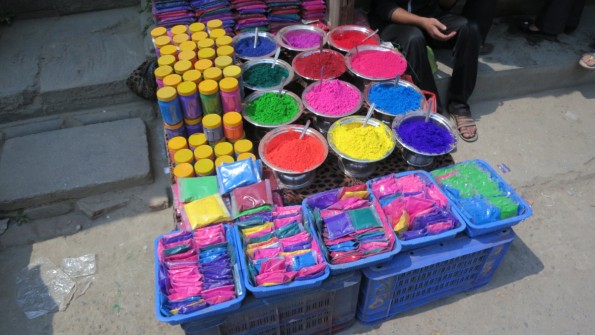
Traveling from Kathmandu to Pokhara took 7 hours by bus and unfortunately that day was the first and most important day of Holi, a colourful Hindu festival that celebrates spring and love. Basically everyone throw packages of exploding paint or water balloons loaded with dyes, into each other while yelling, “Happy Holi”! It’s a joyous occasion that requires new clothes when over, since it’s hard to remove the paint (there were people hiking with dyed hair for the following week).
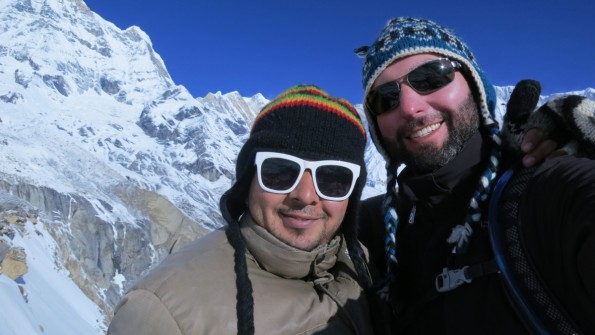
Ratna, my guide for the next 10 days, and I quickly became friends. Although his English was poor, the constant smile on his face and the deep warmth of his heart were always fierce. Mind you, he was not just a guide, but a translator, facilitator, food-order-taker and server – not just to me, but also to people I was having dinner with – and companion. He spoke in detail about the challenges of living in Nepal, about his family struggling after the earthquake – his parent’s home was destroyed and they now remain in a tent – and the lack of proper schooling and well-paying jobs. Above it all, his main concern is to ensure the welfare of his two young children, so they have more opportunities than him. He was easy to love 🙂
Since the trek involved ascending to over 4,000 meters (13,000 feet) above sea level, which is taller than most mountains in Canada, I needed to break a promise to myself of not seeing less than 10C during this sabbatical and to buy winter clothing. This included proper hiking boots, snow pants, hat and gloves; the down-filled jacket and arctic sleeping bag were already included in the price of the tour. Note: since I didn’t need these items after the trek, I gave them to Ratna so he could sell them.
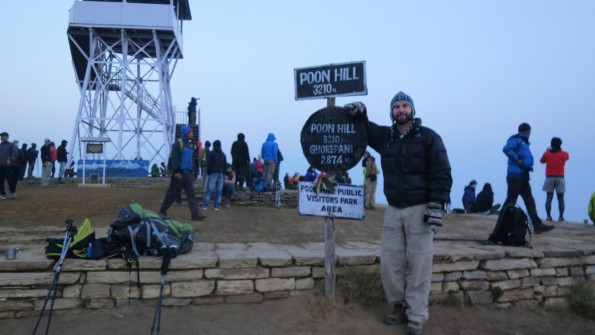
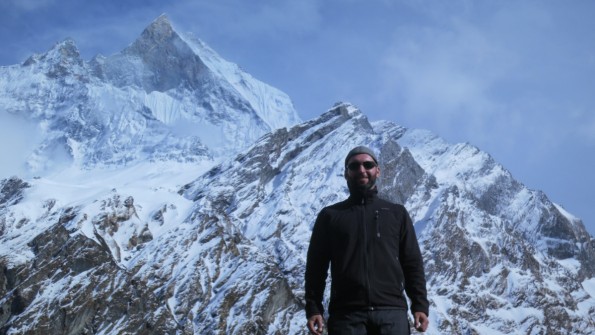
We started early one morning, hiking a well-known route called Annapurna Sanctuary. Apparently over 60% of first time trekkers to Nepal follow this trail, which has multiple paths depending how long you want to invest. We did the complete circuit, from Nayapool to Poonhill to Annapurna Base Camp (ABC) and back to Nayapool. ABC is at the base of the the 10th highest mountain the in world, and only 800 meters less than Everest.
The highlights:
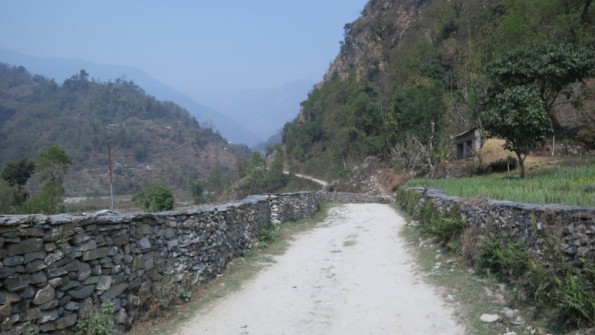
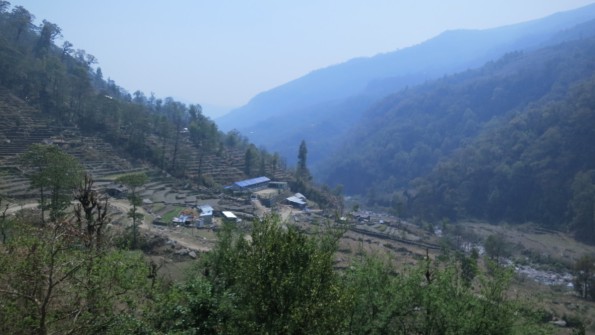
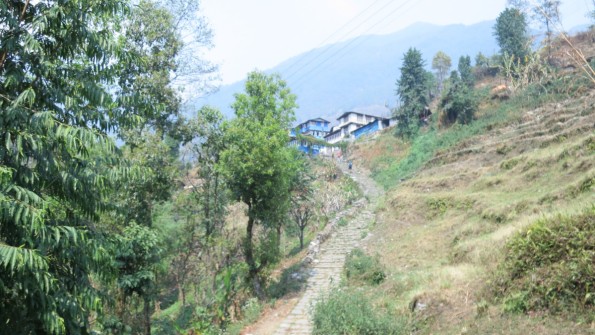
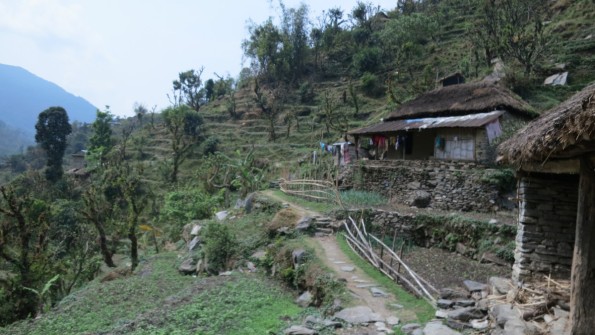
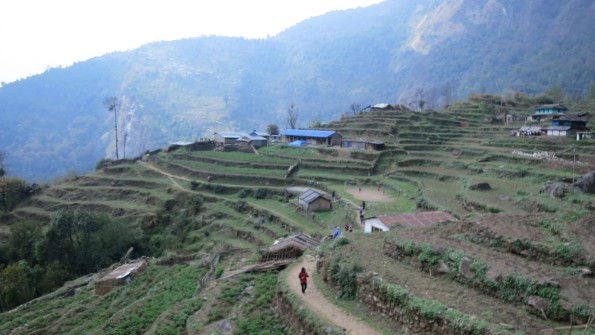
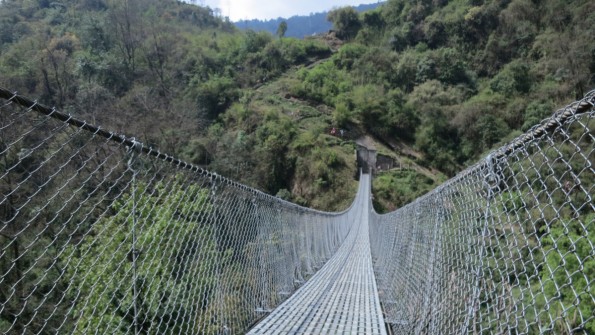
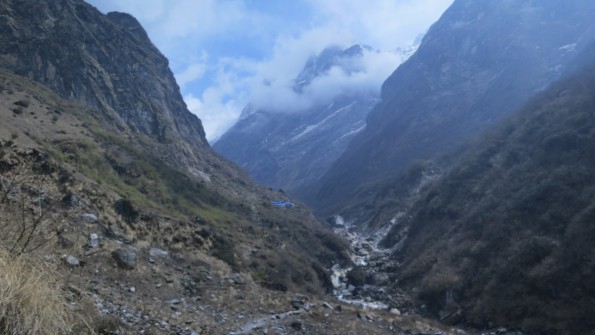
We passed along cascading waterfalls, steel suspension bridges, terraced farmlands, lush forests, breathtaking mountain vistas and beautiful villages
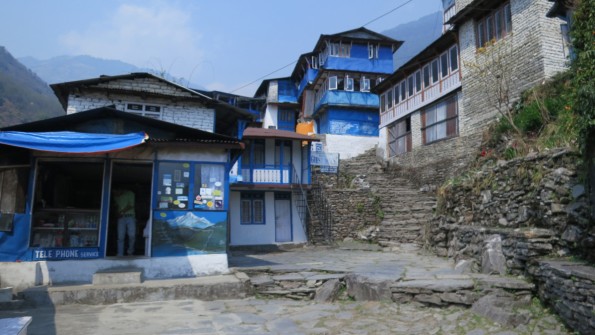
Most villages were a couple of hours apart, each with at least a guesthouse and/or restaurant, so you can rest, have a meal or spend the night
Guesthouses had minimal facilities, such as squatting toilets, but did have warm showers and fresh and delicious home-cooked meals
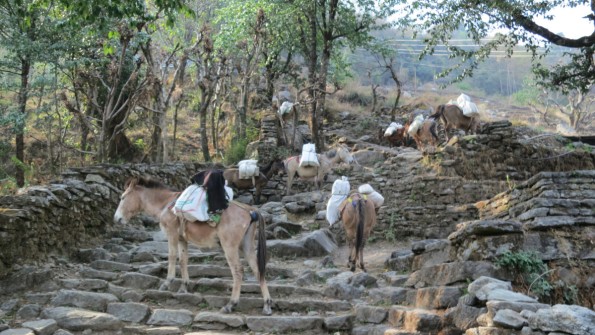
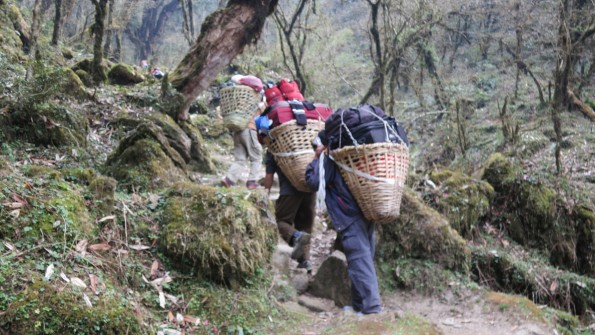
Prices increases as you ascend, since it was challenging for mules and porters to carry supplies
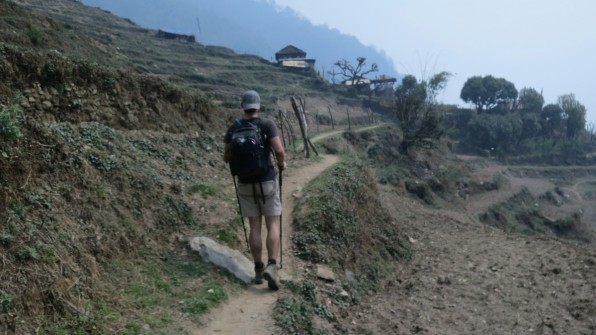
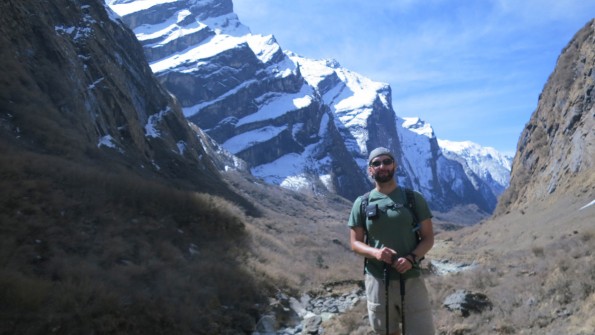
The slopes of the Himalayas tested your stamina and your legs, and I admit to using walking poles to help reduce injury
The weather varied daily, and sometimes even changed mid-day, from warm and sunny to cold and wet
Although there was mostly fog while ascending, there was only a single instance of rain, and we had shelter for those 45 minutes
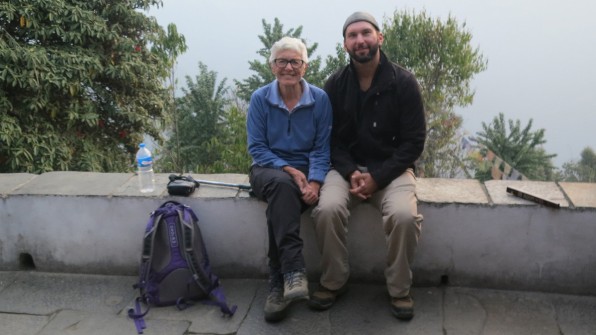
People of all shapes and sizes were following the same trek; individuals, groups and families with kids. I bumped into a lovely elderly lady multiple times, as she motored along as quickly as anyone else. She’s been doing the same trek for 30 years now. How old is she, you ask? Nearly 78! Thank you, Pat, for showing the rest of us how it’s done 🙂
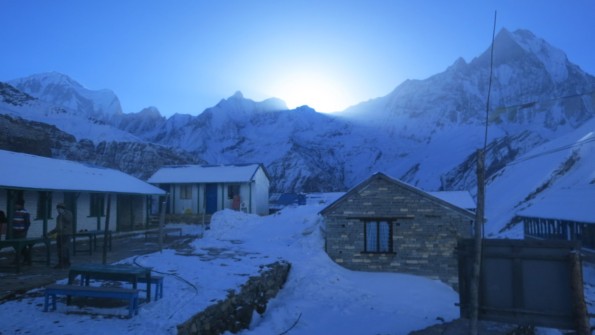
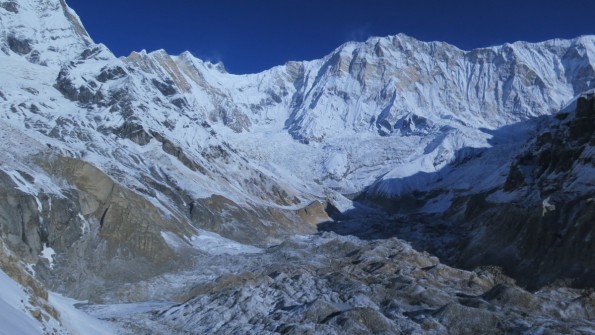
Ratna and I climbed the last two hours to ABC right before dawn, struggling to breathe deeply with each step. The reward was glorious views of the glacier, crystal clear skies (Ratna said he’s never seen it so clear), lots of selfies and most importantly, hot chocolate
During the descend, we spent a few hours in a hot spring, which felt nourishing after so many days on the road. I also made it back to Pokhara in time for full massage, which further accelerated the healing process
In Patagonia, I discovered I love trekking. Nepal took the activity to a whole new level. Between the long days enjoying the wonderful sights and sounds and smells, to being present in the moment, to thinking deeply about many facets of my life, I can safely say coming to Nepal was the right decision. Unfortunately I don’t feel I’m properly expressing my gratitude to Ratna or properly describing the overall experience, so let’s say it was 10 on 10.
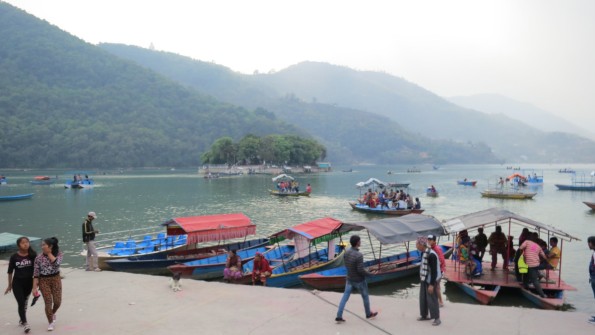
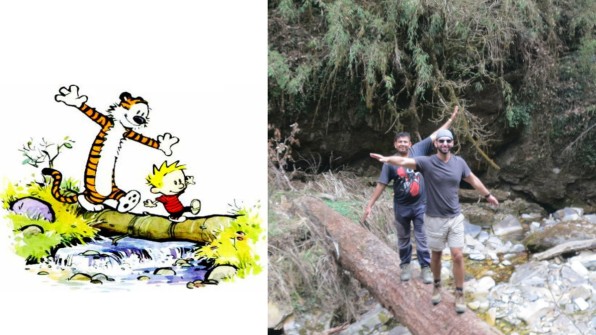
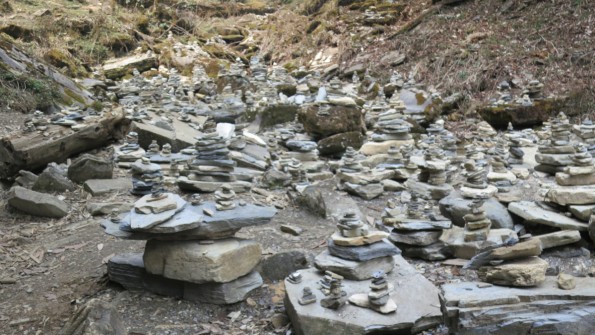
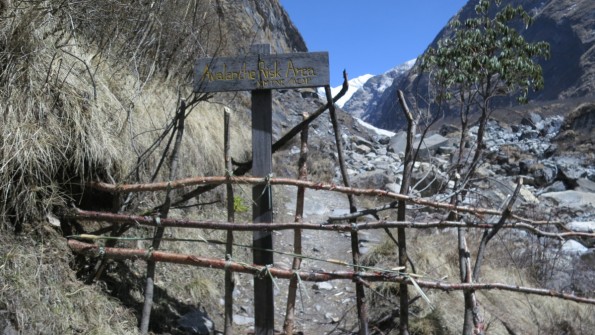
Although the adventure cannot be accurately captured in pictures, here are a few to set the mood. Once again, sorry for the blurriness.